If so, you’ll be in safe hands with Adamson’s. Got a question, want an idea of price or ready to book your FREE home design visit?

Some kitchen trends arrive loudly, dominate for a few years, and then disappear just as quickly. Sage green isn’t one of them. Instead, it’s settled in slowly and confidently, earning its place as a favourite through versatility, warmth and staying power. Over the last few years, it’s become one of the most requested colours we work with and it’s easy to see why.
Sage green sits in that rare sweet spot between character and neutrality. It brings colour into a space without overwhelming it, softens modern lines, and adds depth where plain whites or greys can sometimes feel flat. It’s calming without being cold, and interesting without feeling trend-led in a way that dates.
One of the reasons sage green kitchens have remained so popular is their ability to adapt. The colour shifts subtly depending on light, finishes and surrounding materials, which means it can feel completely different from one home to the next.
In brighter spaces, sage green reads fresh and airy, almost botanical. In moodier rooms, it becomes richer and more grounded. It pairs effortlessly with natural materials (wood, stone, warm metals) which helps it feel timeless rather than decorative. There’s also a familiarity to it; it feels lived-in and welcoming from day one, rather than something you need to “grow into”.
What’s been most interesting to see is how many different directions sage green can go in, depending on the brief.
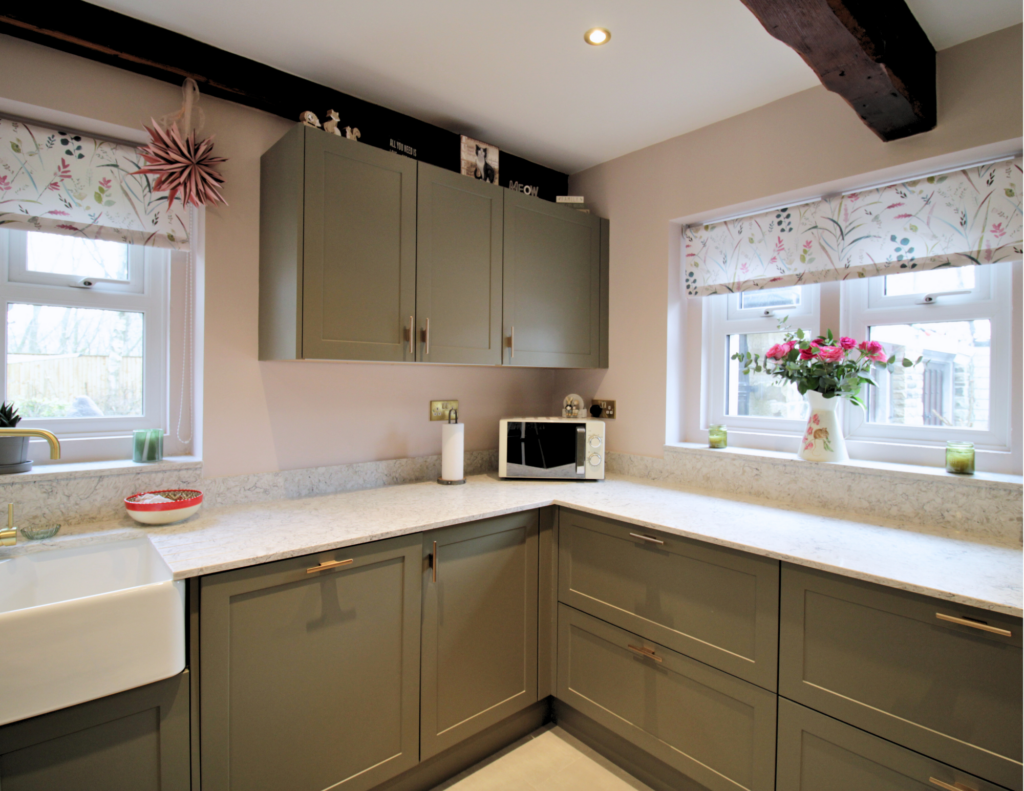
In more traditional homes, we’ve used sage green on classic shaker-style cabinetry, paired with warm oak worktops or stone surfaces. The result feels elegant and settled, as though the kitchen has always belonged there. Small details like softer edge profiles or aged brass handles help to lean into that timeless feel without tipping into anything too formal.
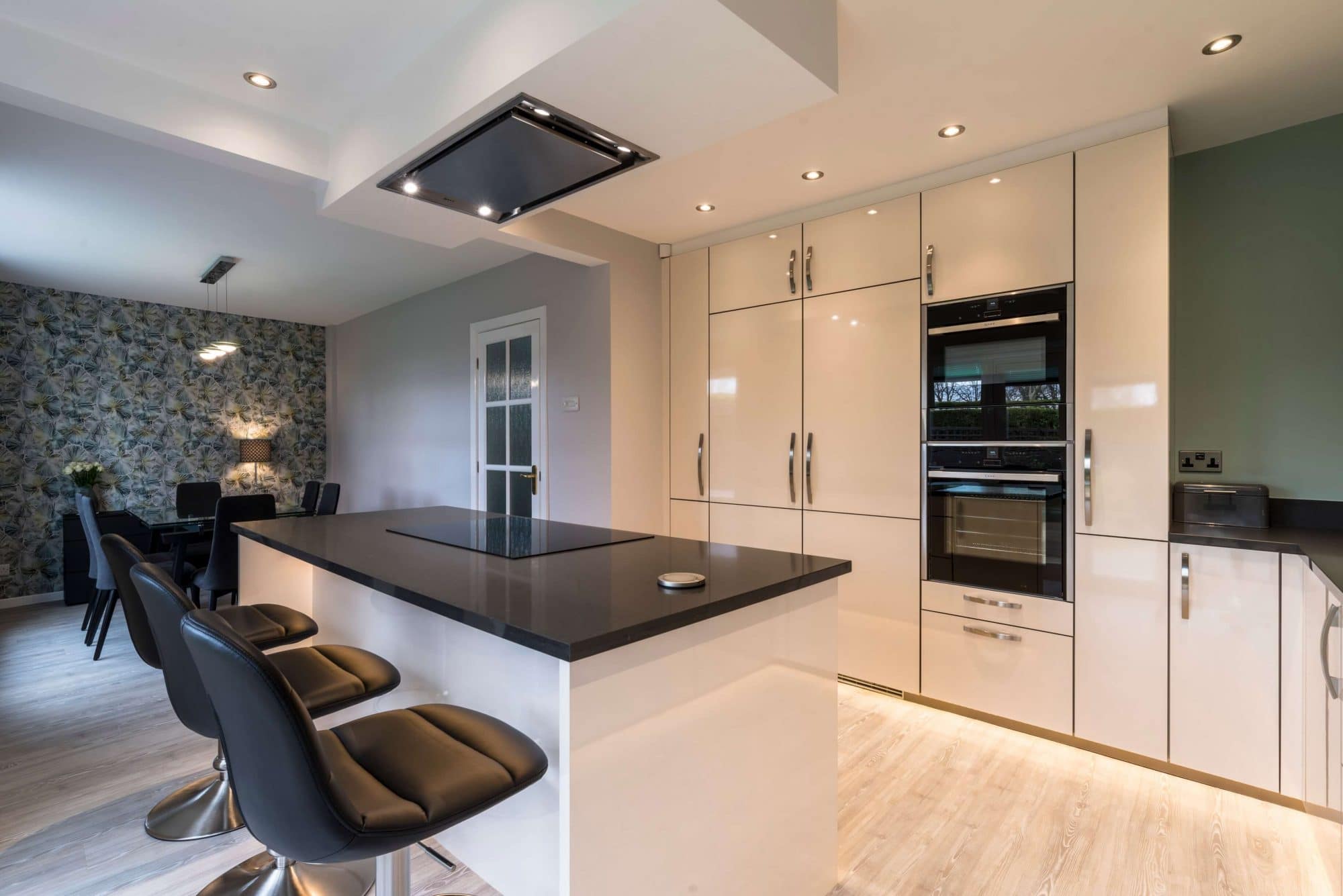
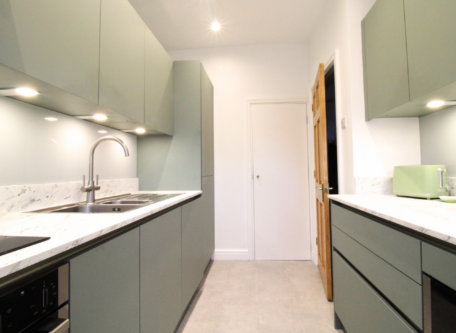
For contemporary spaces, the same colour takes on a completely different personality. Flat-front doors, integrated appliances and minimal hardware give sage green a clean, architectural look. Combined with pale quartz, concrete-effect finishes or even black accents, it feels modern but still soft a welcome alternative to stark monochrome schemes.
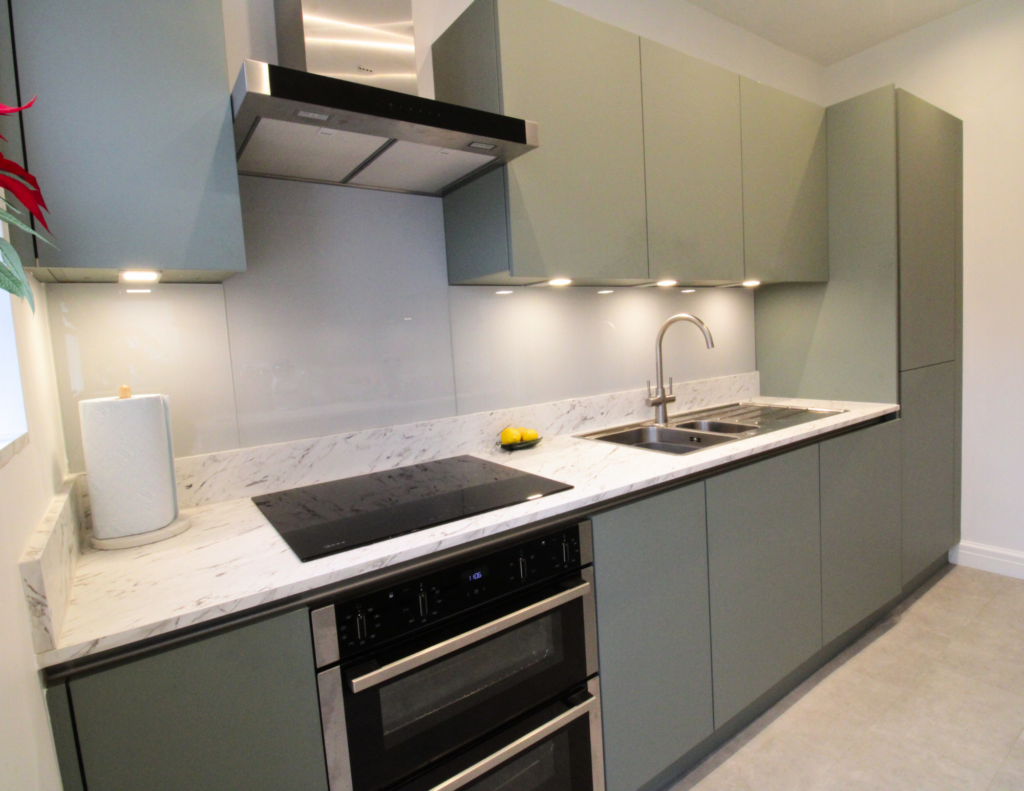
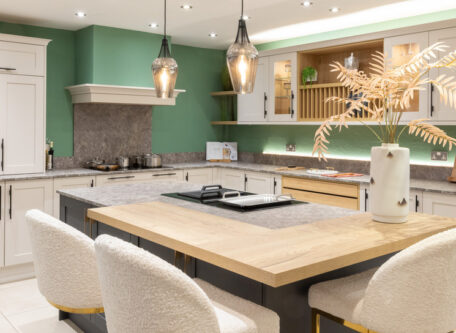
Open-plan homes often benefit from sage green’s ability to anchor a space. Used on an island or lower cabinetry, it helps zone the kitchen without breaking the flow, especially when paired with lighter tones elsewhere. It adds definition while still allowing the room to breathe.
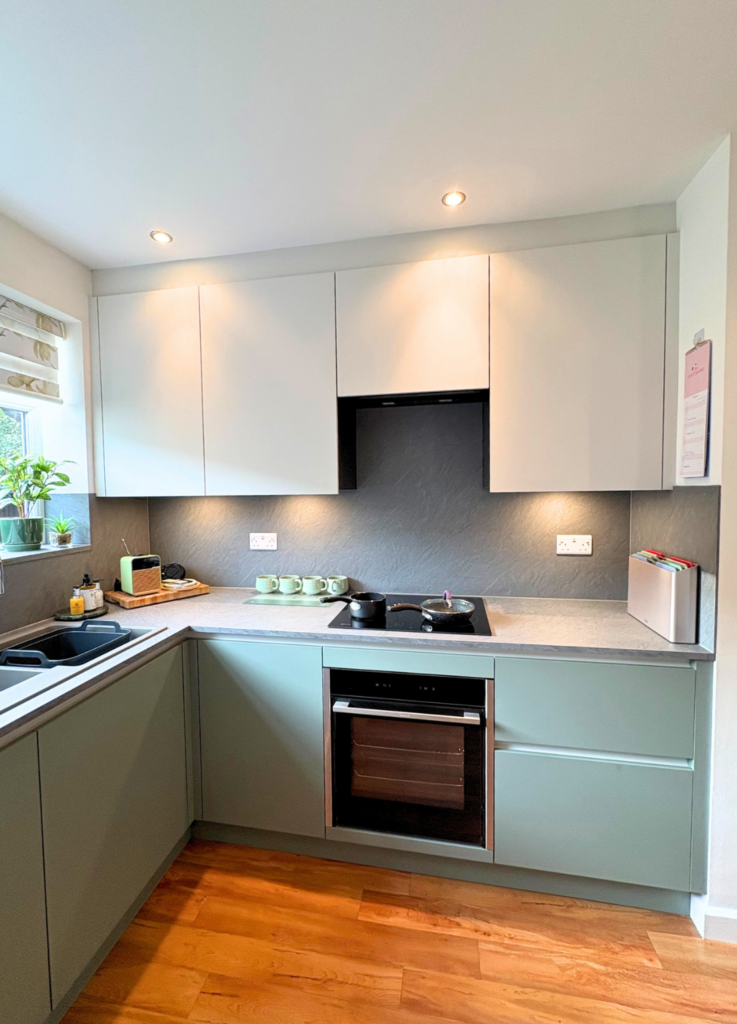
Perhaps the biggest reason sage green has stood the test of time is that it’s forgiving. It works just as well with evolving interiors as it does with carefully planned schemes. Change the wall colour, swap accessories, update lighting the kitchen still holds its own. That flexibility makes it a reassuring choice for a space that’s meant to last.
Sage green kitchens don’t shout for attention, but they don’t fade into the background either. They strike a balance that feels thoughtful, personal and enduring which is exactly what most people want from the heart of their home.