

Homeowners will debate this question for years. It’s often triggered by life events, maybe a new arrival or the opposite, adult children flying the nest.
“We need more space.”
“Should we just move?”
“But we love it here…”
“Could we extend?”
If you’ve outgrown your home, deciding what to do next isn’t always straightforward. Moving gives you the opportunity to find a property that already has the space you’re missing. Extending means you can stay in the home, street and community you already love, but reshape the property around what you need now.
Both involve a significant investment and a fair amount of upheaval, so before opening Rightmove or booking an appointment with an architect, it’s worth properly considering what you’re trying to solve.
First, what have you actually outgrown?
Before deciding to move or extend, work out what’s making your current home feel too small. Perhaps the kitchen becomes cramped when everyone is home. You might need another bedroom, a proper utility room or somewhere to work. Maybe you’ve got enough square footage already, but the layout means you’re simply not using it very well.
Write down the things you would change about your current home if you could then separate them into two lists: things that could realistically be changed through renovation and things that couldn’t.
You can create another bedroom. You can’t make the garden twice the size.
You can knock through a wall to create a larger kitchen. You can’t move the house onto a quieter road.
That distinction can make the decision considerably easier.
The case for moving
Sometimes the things you’ve outgrown extend beyond the four walls of your house. Moving could give you a larger garden, a different location, better parking or access to different schools and amenities. You also have the opportunity to find a property that already offers the number of bedrooms and overall footprint you need.
There may also be limitations to how far your existing home can realistically be extended. Plot size, planning restrictions and the existing structure can all influence what’s possible.
The advantages of moving
You can change things about your property that renovation simply can’t solve, particularly location and plot size. There’s also the possibility of finding a home that already ticks most of your boxes without living through major building work. And for some homeowners, moving somewhere completely different is part of the appeal. Your needs may have changed significantly since you bought your current home.
The drawbacks of moving
Moving isn’t simply the difference between the value of your current home and the asking price of the next one. You’ll need to consider estate agent fees, legal fees, surveys, removals, Stamp Duty and potentially a larger mortgage. Then there’s the money you may want to spend decorating or renovating the new property once you’ve moved in. There’s also no guarantee your next home will be perfect. You may gain the extra bedroom you’ve been desperate for but inherit a kitchen you dislike, an ageing bathroom or a layout that still doesn’t quite work.
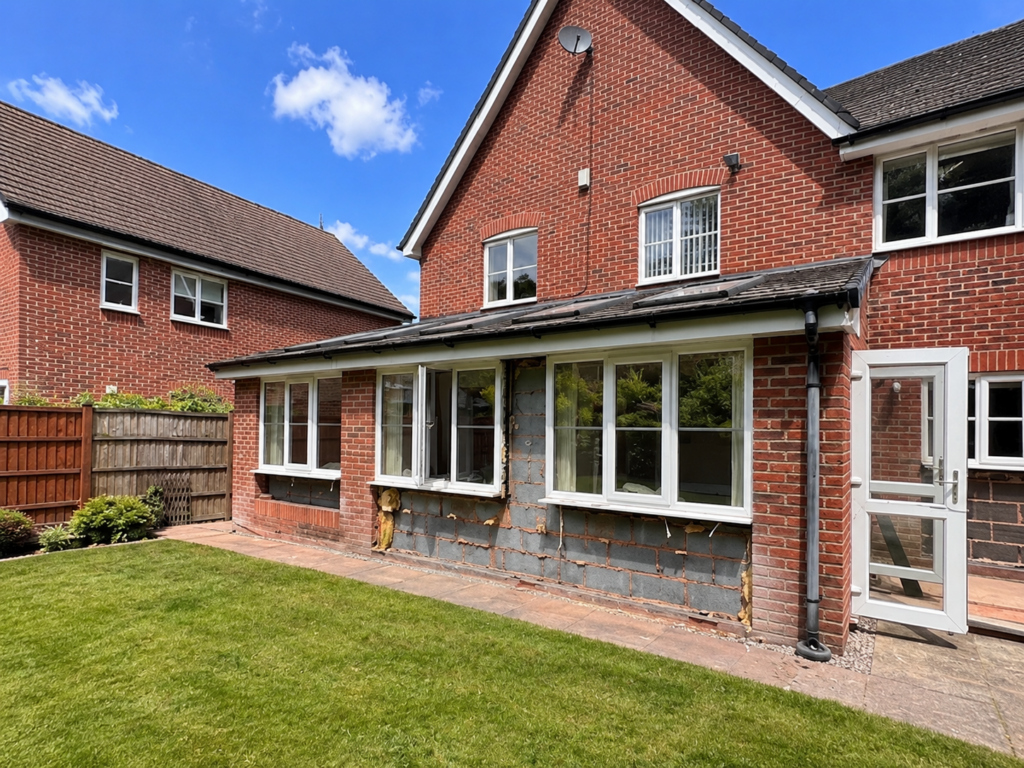
The case for extending
If you love your home but have simply run out of space, extending can offer a very different solution. Instead of searching for another property that comes close to what you want, you can create additional space around the way you already live.
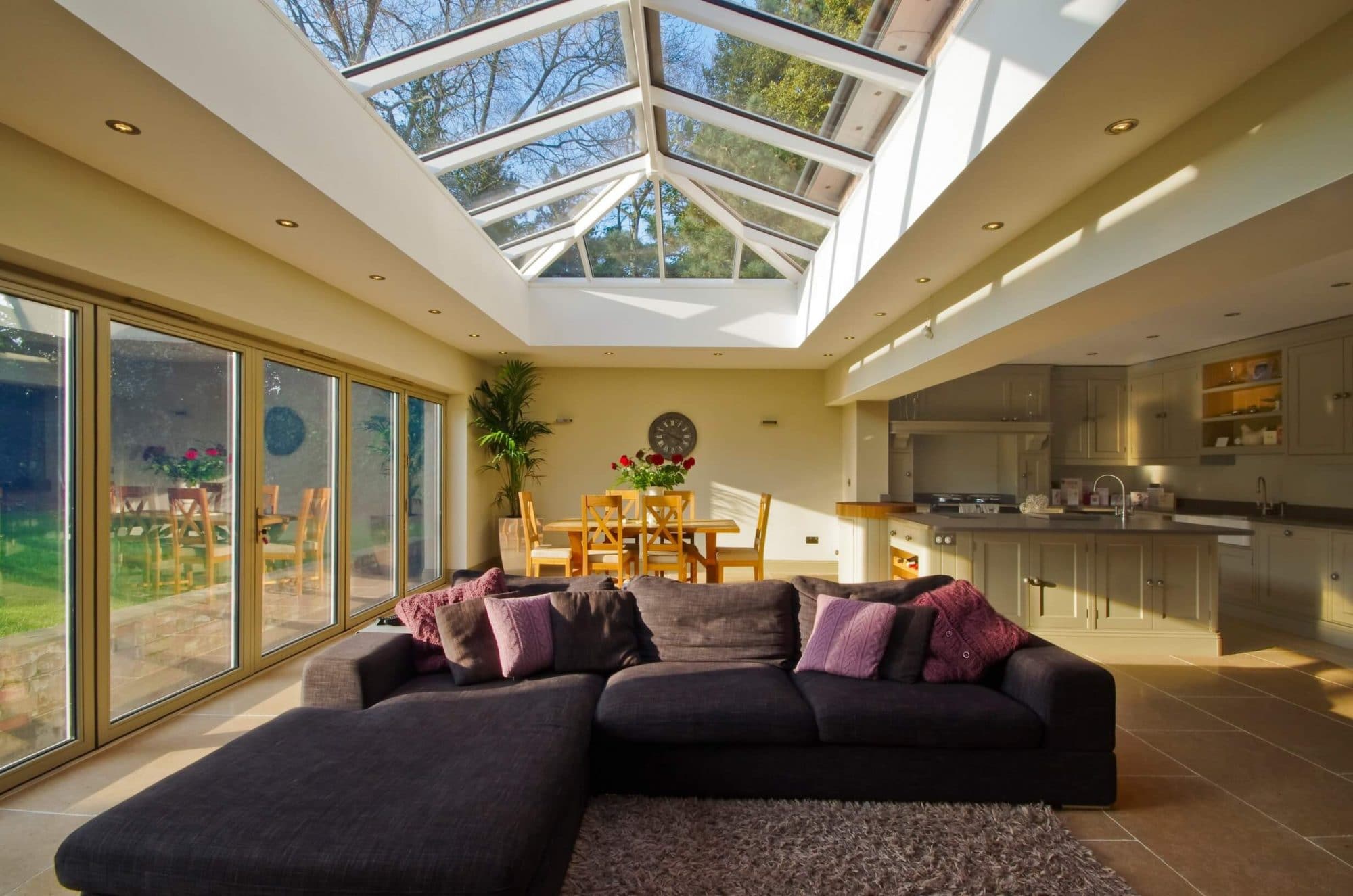
A rear or side extension could create the kitchen and dining area your existing layout is missing. Building above a garage could provide another bedroom and ensuite. A garage conversion might give you an office, utility room or additional living space without increasing the property’s existing footprint.
The important question is what’s possible within your particular home.
The advantages of extending
You get to stay in a location you already know and love while addressing the parts of your home that no longer work. You also have much greater control over the end result. Rather than accepting somebody else’s choices, you can design the layout, storage, finishes and features around your own priorities.
A thoughtfully designed extension can also solve several problems at once. Adding space may allow the existing ground floor to be reconfigured too, changing how rooms connect and improving the overall flow of the property.
The drawbacks of extending
Building work is disruptive. There’s no point pretending otherwise. Depending on the scale of the project, there may be periods when parts of your home are inaccessible and your normal routine needs to change. You’ll also need to establish what’s structurally and financially realistic. Planning requirements, the condition of the existing property and the amount of work involved can all affect the scope of the project. This is why getting professional advice before becoming too attached to a particular idea is so important.
Don’t compare an extension quote with a house price
One of the most useful things you can do is compare the total cost of both options. If you’re considering moving, look at properties you’d genuinely be prepared to buy and calculate what the move would cost once Stamp Duty, fees, removals and any immediate work to the new property are included.
Then establish what it would realistically cost to adapt your current home to achieve the things you’re missing. You’re not necessarily asking which number is smaller. You’re asking which investment gets you closer to the home you actually want.
Think about the next 10 years, not just today
Your decision also needs to make sense beyond the immediate problem. Think about how you expect to use your home over the next five, ten or even twenty years. Will children need more independence as they get older? Could you need a home office? Are you approaching retirement and thinking about how the house will work later in life? Would an additional bathroom make mornings easier?
A renovation that only fixes today’s frustration could leave you reconsidering your options again in a few years. Equally, there’s little point investing heavily in extending a property if you already suspect you’ll want to live somewhere completely different in the near future.
So, should you move or extend?
Start with the things you can’t change. If it’s the location, garden, neighbourhood or fundamental character of the property that’s making you unhappy, moving may well be the better investment.
If you still love coming home but find yourself constantly saying “if only we had another bedroom” or “if only this kitchen was bigger”, it’s worth finding out what could be achieved through renovation before putting the house on the market.
Speak to an estate agent about your property’s current value and the local market. Speak to an experienced renovation company or architectural designer about what’s realistically possible with the house you already have. Then compare the two with real information rather than assumptions.
It’s a big decision, and there’s no universally right answer. Take your time, work out what you really want your home to give you and look carefully at the true cost and compromises involved with both options.
Whichever route you eventually choose, you’ll know you’ve made the decision with a much clearer idea of what comes next.